
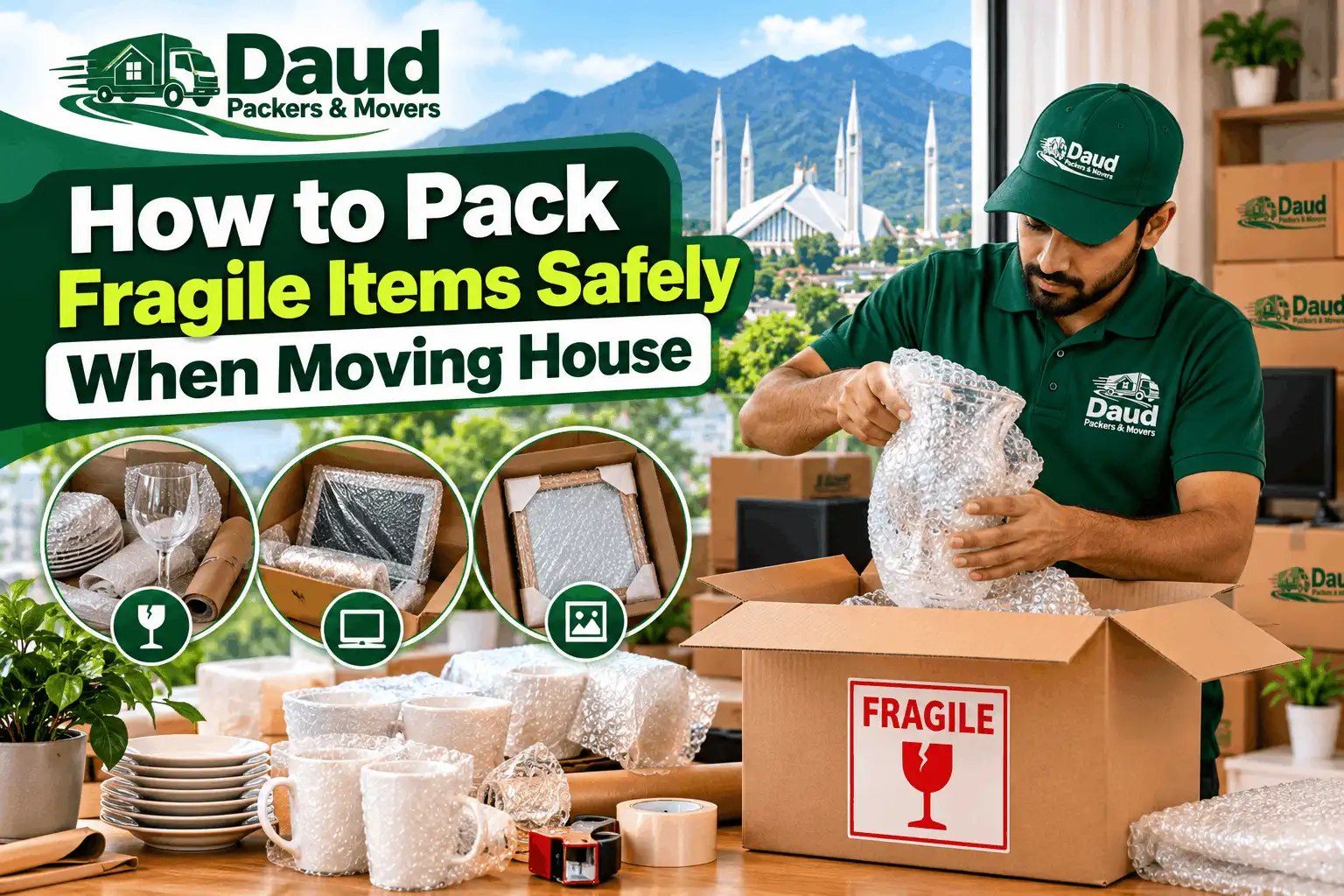
A single cracked plate or a shattered picture frame can turn an exciting move into a frustrating one, and more often than not, the damage happens weeks before the truck even leaves, the moment something gets wrapped in a layer of newspaper instead of real packing material. If you want your glassware, electronics, and breakables to survive the move in one piece, the short answer is this: use proper materials for each item type, wrap everything individually, cushion the empty space inside every box, and label fragile cartons clearly before they’re loaded. The rest of this guide walks through exactly how to do each of those steps properly, and where even careful people tend to go wrong.
Why Fragile Items Break Even When People Think They Packed Carefull
Most damage during a house move doesn’t happen because a box was dropped. It happens because the item inside it was never protected from the small, constant vibration of a drive across Islamabad, or further out to Rawalpindi, Lahore, or beyond. A plate sitting loosely in a half-empty box will knock against its neighbors dozens of times before it ever reaches your new home, and that’s usually enough to chip, crack, or shatter it.
This is the part people searching “how to pack fragile items for moving” often miss. It’s not just about wrapping, it’s about eliminating movement inside the box entirely.
What You Actually Need Before You Start Packing
Before touching a single plate, get these materials together. Trying to pack fragile items with whatever’s lying around the house, old newspaper, plastic bags, loose fabric, is where most damage starts.
- Sturdy 5-ply cartons, not thin single-wall boxes that bend under weight
- Bubble wrap, enough for multiple layers on each fragile item
- Packing paper or foam sheets for cushioning gaps
- Strong packing tape, not the thin stationery kind
- A marker for labeling boxes clearly
If you’re unsure how much of each you’ll need, this is one area where guessing low causes real problems later, it’s better to have extra bubble wrap left over than to run out halfway through your kitchen cabinet.
How to Pack Glassware and Crockery
Start by wrapping each glass, plate, or bowl individually in bubble wrap, securing it with tape so it doesn’t unravel during transit. Plates should be packed on their edge, like records in a crate, not stacked flat, since flat stacking puts direct pressure on the plate underneath and is one of the most common causes of cracked dinnerware.
Line the bottom of the carton with a thick layer of crumpled packing paper before adding any items, and fill every gap along the sides and top with more paper or bubble wrap once everything’s in. If you can hear items shifting when you gently shake the sealed box, there’s still too much empty space inside.
How to Pack Electronics and Screens
Televisions, monitors, and other screens need a different approach than glassware. Where possible, use the original box the item came in, since it’s shaped specifically to hold that device securely. If you don’t have it, wrap the screen in a moving blanket or thick padding, then box it upright, never flat, and never with heavy items stacked on top.
Remove any loose cables and pack them separately in a labeled bag, taped to the outside or placed in the same box, so you’re not searching for them later. For desktop computers and smaller electronics, anti-static bubble wrap is worth using specifically, since standard bubble wrap can occasionally cause static buildup around sensitive components.
How to Pack Mirrors, Artwork, and Picture Frames
Flat, fragile items like mirrors and framed artwork need corner protection first, cardboard corner guards or folded cardboard taped over each edge, before the whole piece is wrapped in bubble wrap. Pack these upright along the side of the truck rather than flat, since flat stacking risks pressure cracks across the glass or frame.
For anything particularly valuable, a flat mirror or picture carton, sized specifically for this shape, gives far more protection than a standard box.
Labeling Boxes So Nothing Gets Mishandled
Every box containing fragile items should be marked clearly on at least two sides, not just the top, since boxes often get stacked or turned during loading. Write the room it belongs to and the word “Fragile” in large, visible letters, and if possible, note which side should stay facing up.
This single step solves a problem that search queries like “fragile boxes getting crushed during move” point to directly, boxes get mishandled most often when the person carrying them has no visual cue about what’s inside.
What a Recent Islamabad to Rawalpindi Move Taught Us About Packing
A few weeks ago, our crew handled a house shift from F-10 in Islamabad to a home in Rawalpindi’s Satellite Town, a family relocating with a full kitchen’s worth of crockery, a large wall mirror, and a home entertainment setup that included a wall-mounted television and a sound system. The homeowner had specifically asked us to pay extra attention to a set of imported glassware that had survived two previous moves only through sheer luck.
Our team individually wrapped every glass and plate, packed the set standing on edge rather than stacked, and cushioned the box with enough packing paper that nothing shifted when tested. The mirror was corner-protected and boxed upright, and the television traveled in its original packaging with cables separated and labeled. The entire load made the short trip to Rawalpindi without a single item damaged, not because the distance was short, but because the packing process didn’t cut corners just because the drive wasn’t long.
This is the same standard we apply whether a move crosses the city or crosses the country, since the packing itself, not the length of the journey, is what actually determines whether fragile items survive.
What Professional Movers Do Differently
Anyone can wrap a glass in bubble wrap. What separates a careful DIY pack from a professional one usually comes down to a few specific habits.
Professional crews test every box before sealing it, gently shaking it to check for movement, rather than assuming it’s packed well because it looks full. They also separate fragile cartons during loading, positioning them where they won’t bear the weight of heavier boxes stacked on top, something that’s easy to overlook when you’re packing your own truck without a clear loading plan.
Our Packing & Unpacking service is built around exactly this standard, individual wrapping, tested boxes, and materials matched to what’s actually being packed, rather than a one-size-fits-all approach applied to every item regardless of fragility.
When Furniture and Fragile Items Need to Travel Together
Fragile items often share a truck with much heavier furniture, and that combination is where a lot of damage happens if the load isn’t planned properly. A wardrobe or dining table shifting during transit can crush a box of glassware positioned underneath it.
This is why furniture handling and fragile item packing need to work together as part of the same process, not as two separate jobs. Our Furniture Moving Services page covers how we dismantle, wrap, and position large items specifically to avoid this kind of conflict inside the truck.
If You’re Only Packing, Not Moving the Whole House
Not everyone needs a full house shifting package just to get help with fragile or awkward items. If you’ve already handled most of your packing yourself and only need assistance with breakables, glassware, mirrors, or electronics, that kind of focused help is available without booking a complete move.
Our House Shifting Services page outlines the full process for those who want everything handled, while a partial pack focused specifically on fragile items is also an option worth asking about directly.
Loading Fragile Boxes the Right Way
Packing correctly only matters if loading is done with the same care. Fragile boxes should go in last, positioned where they won’t be crushed by anything heavier, and never placed at the bottom of a stack regardless of how sturdy the box looks from the outside.
Our Loading & Unloading Services are built around exactly this kind of careful positioning, useful whether you’re booking a full move or just need trained hands to load a truck you’ve arranged yourself.
Why Choose Us for Packing Fragile Items
Simple reason: we treat packing as a skill, not an afterthought squeezed in before loading. Every fragile item gets individual attention, ever box gets tested before it’s sealed, and every truck is loaded with fragile cartons positioned to avoid pressure from heavier items. That standard hasn’t changed since 2001, whether the move is three streets away or across the country.
Frequently Question
What’s the best material to pack fragile items in? Bubble wrap combined with sturdy 5-ply cartons works best for most breakables. Each item should be individually wrapped, with the box lined and filled with packing paper to eliminate movement during transit.
Should plates be packed flat or on their edge? On their edge, like records in a crate. Stacking plates flat puts direct pressure on the plate underneath, which is one of the most common causes of cracked dinnerware during a move.
How do I know if a box is packed well enough? Gently shake the sealed box. If you hear or feel items shifting inside, there’s still too much empty space, and more cushioning is needed before it’s ready to load.
Can I use newspaper instead of bubble wrap? Newspaper offers minimal cushioning compared to bubble wrap and can also transfer ink onto glassware. It’s better used as extra filler around already-wrapped items, not as the primary protection.
Do movers in Islamabad provide packing materials, or do I need my own? Professional movers typically include packing materials, cartons, bubble wrap, and tape, as part of the service, so you don’t need to source them separately before moving day.
How should I pack a television for moving? Use the original box if you still have it. Otherwise, wrap the screen in a moving blanket, box it upright, and never place anything heavy on top or lay it flat during transport.
What’s the safest way to pack a large wall mirror? Protect all four corners first, then wrap the full mirror in bubble wrap and transport it upright, never flat, since flat stacking risks pressure cracks across the glass.
Is it worth hiring help just for packing fragile items, without a full house move? Yes, if most of your packing is already done and you only need help with breakables, mirrors, or electronics, focused packing assistance is available without booking a complete moving package.